
The metal you choose directly affects how long your engagement ring, wedding ring, or custom jewellery piece lasts. It influences how your rings wear over time and how confidently you can wear your jewellery every day, especially when you are considering natural diamonds, lab-grown diamonds, solitaire engagement rings, emerald cut stones, wedding rings, diamond earrings, or even future pieces that match your bespoke design.
Most buyers do not realise that gold purity levels dramatically change durability, colour, ageing, and lifetime value for engagement rings, wedding rings, bracelets, and other diamond jewellery. This matters whether you prefer a round diamond, an emerald cut diamond, a princess cut diamond, or a lab-grown diamond alternative. It also affects how your engagement ring pairs with wedding bands, bracelets, earrings, and other jewellery pieces you may create in the future.
If you want a diamond engagement ring that actually means something, whether it is a solitaire engagement ring, a trilogy style engagement ring, an emerald cut lab-grown centre stone, or a custom yellow gold engagement ring, this guide breaks down the differences between 9K, 14K, and 18K gold so you can choose confidently. When you book an appointment, you work directly with me, not in a shop. You are guided through every decision so you never have to guess when it comes to choosing rings, natural diamonds, lab-grown options, wedding bands, solitaire designs, emerald styles, bracelets, or any custom jewellery you want to create.
If you’re ready to create the one piece of jewellery that truly reflects your story, you can book an in-person or Zoom consultation where we explore natural and lab-grown diamond options without the overwhelm of a traditional jewellery shop. Let’s bring your vision to life with clarity, confidence, and craftsmanship that lasts.
How Purity Shapes the Longevity of Your Engagement Ring
When you choose an engagement ring, the purity of gold you select influences long-term durability, wear resistance, colour stability, and how the engagement ring ages across decades. This becomes even more important when you are selecting diamonds, comparing natural diamonds with lab-grown diamonds, choosing between solitaire engagement rings and trilogy engagement rings, or pairing your engagement ring with matching wedding bands.
Whether you are designing engagement rings, wedding rings, jewellery designs, earrings, bracelets, or heirloom jewellery, the purity level of gold determines how well your natural diamonds or lab-grown diamonds are protected. It also influences how secure your emerald cut diamonds, round diamonds, princess diamonds, or pear diamonds will be in the ring setting.
Designing jewellery, from engagement rings and wedding rings, with expert guidance prevents confusion and eliminates common mistakes couples make when browsing online or in a shop. When selecting a diamond, choosing the right cut, evaluating lab-grown diamonds, comparing emerald shapes, or designing matching rings, clients appreciate clarity and education.
Purity Levels
- 24K = pure gold
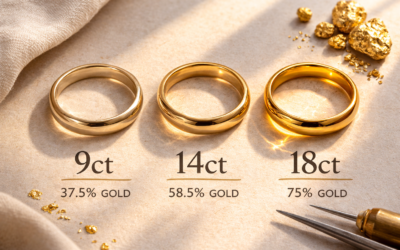
- 18K = 75 percent gold
- 14K = 58.5 percent gold
- 9K = 37.5 percent gold
These levels impact jewellery durability and long-term strength for engagement rings, wedding rings, custom pieces, earrings, bracelets, and wedding bands. They also influence how natural diamonds or lab-grown diamonds are secured over time.
When I meet with clients in Brisbane, the Gold Coast, and the Sunshine Coast in person or via Zoom (all other locations in Australia will be via Zoom only), I guide them through how purity affects lifetime wear. This includes diamond engagement rings, solitaire engagement rings, emerald cut engagement rings, and carefully matched wedding bands. Clients also view natural diamonds, lab-grown diamonds, and design options directly with me so they understand how every choice affects their engagement rings and their jewellery collection. Don’t wait, book an appointment today!
The Toughest Type for Daily Wear: 9K vs 14K vs 18K Compared
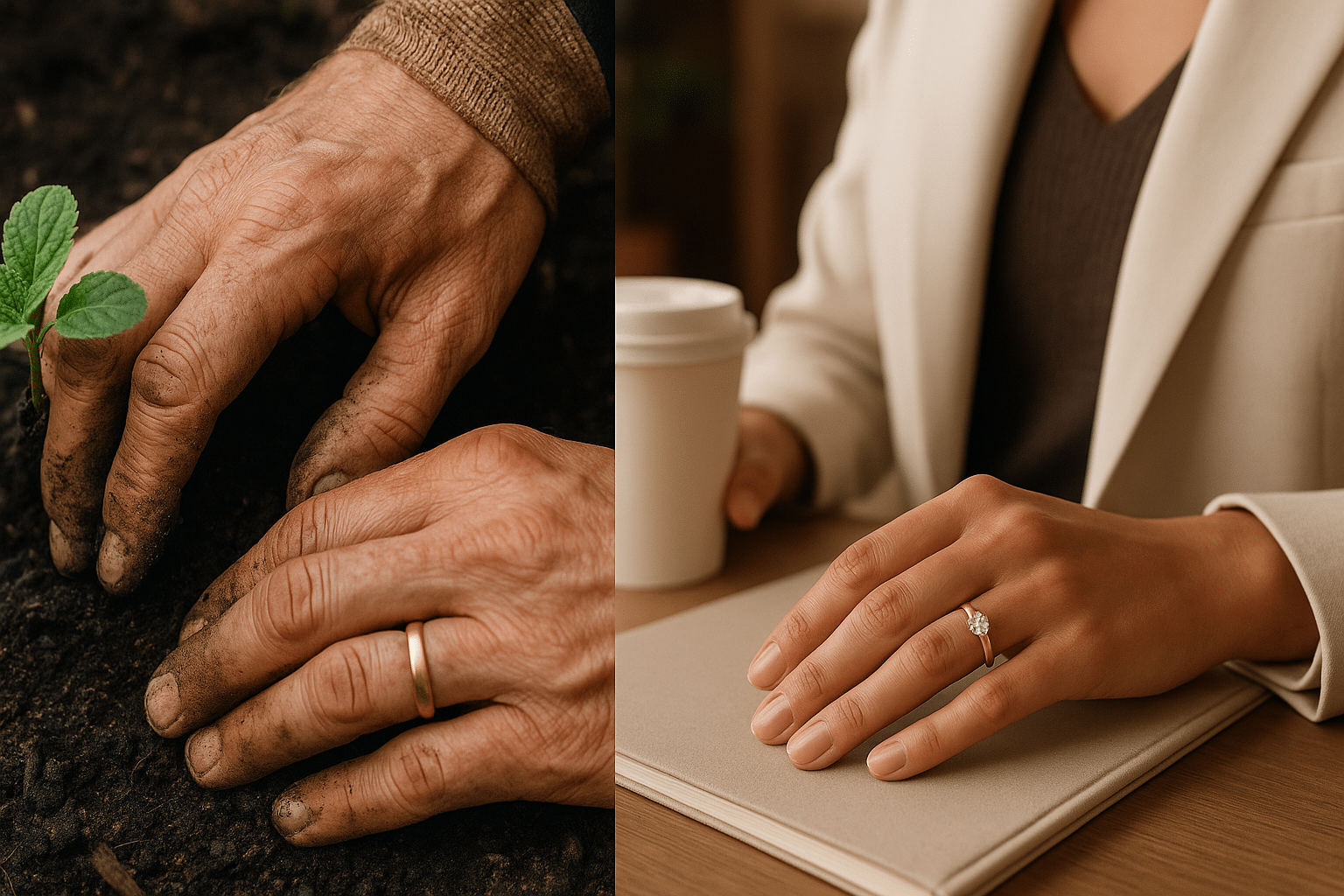
Understanding how each purity behaves is essential before selecting an engagement ring or wedding ring. You do not want to propose with something ordinary when you could instead create an engagement ring, a set of rings, or wedding bands that truly match your lifestyle. The right choice ensures your natural diamond, lab-grown diamond, emerald cut stone, or solitaire design performs beautifully for decades.
Durability Comparison Table
| Type | Hardness | Best For | Long-Term Strength |
|---|---|---|---|
| 9K | Hardest alloy blend | Heavy daily wear and hands-on professions | Excellent structural durability |
| 14K | Balanced hardness | Most lifestyles and modern ring designs | Very strong and stable |
| 18K | Softest but richest appearance | Luxury pieces and low-impact lifestyles | Strong but more prone to marks |
Why it matters
- 9K contains the highest proportion of hard alloys, making it ideal for engagement rings and wedding bands designed for high durability.
- 14K offers an excellent balance for most engagement rings, diamonds, refined jewellery pieces, earrings, and wedding bands.
- 18K appeals to clients wanting rich colour and elegance for diamonds, solitaire rings, emerald stones, earrings, jewellery pieces, or matching bands.
This matters even more when choosing diamond shapes such as round diamonds, emerald cut diamonds, pear diamonds, marquise diamonds, radiant diamonds, or lab-grown diamonds. The right purity ensures a secure ring setting for everyday wear, whether you are designing a solitaire diamond ring, a trilogy ring, or a detailed engagement ring.
Clients who work with their hands often prefer 14K for wedding bands, engagement rings, and everyday jewellery because it is the one that balances beauty, durability, and long-term comfort.
Colour, Shine and Ageing: How Each Karat Looks Years From Now
Understanding how each purity ages will help you feel confident during your consultation when choosing engagement rings, wedding rings, diamond jewellery, or lab-grown diamond designs.
Yellow Gold Variations
- 18K yellow gold appears to be the richest for engagement rings, solitaire rings, earrings, and wedding bands.
- 14K yellow gold maintains excellent colour stability for rings and bands.
- 9K yellow gold can look paler and may dull faster on rings, earrings, and other jewellery pieces.
Rose Gold Variations
- 18K rose gold offers a deep luxury hue suitable for engagement rings and wedding rings.
- 14K rose gold gives a balanced tone and excellent wear for engagement rings, solitaire rings, earrings, and matching wedding bands.
- 9K rose gold may appear coppery and darken over time.
White Gold Variations
- All require rhodium plating to maintain brightness.
- 14K white gold usually keeps its white appearance longer on rings, earrings, and bands.
- 9K white gold requires more frequent plating.
- 18K white gold is softer but visually striking on diamonds, emeralds, solitaire rings, and earrings.
If you’re ready to create the one piece of jewellery that reflects your partner’s style for decades to come, you can book a face-to-face or Zoom consultation, based on your location, where we explore natural and lab-grown diamond options without the pressure of a traditional jewellery shop. Let’s bring your vision to life with confidence and craftsmanship.
Strength, Beauty, and Budget: Which Karat Gives the Best Lifetime Value?
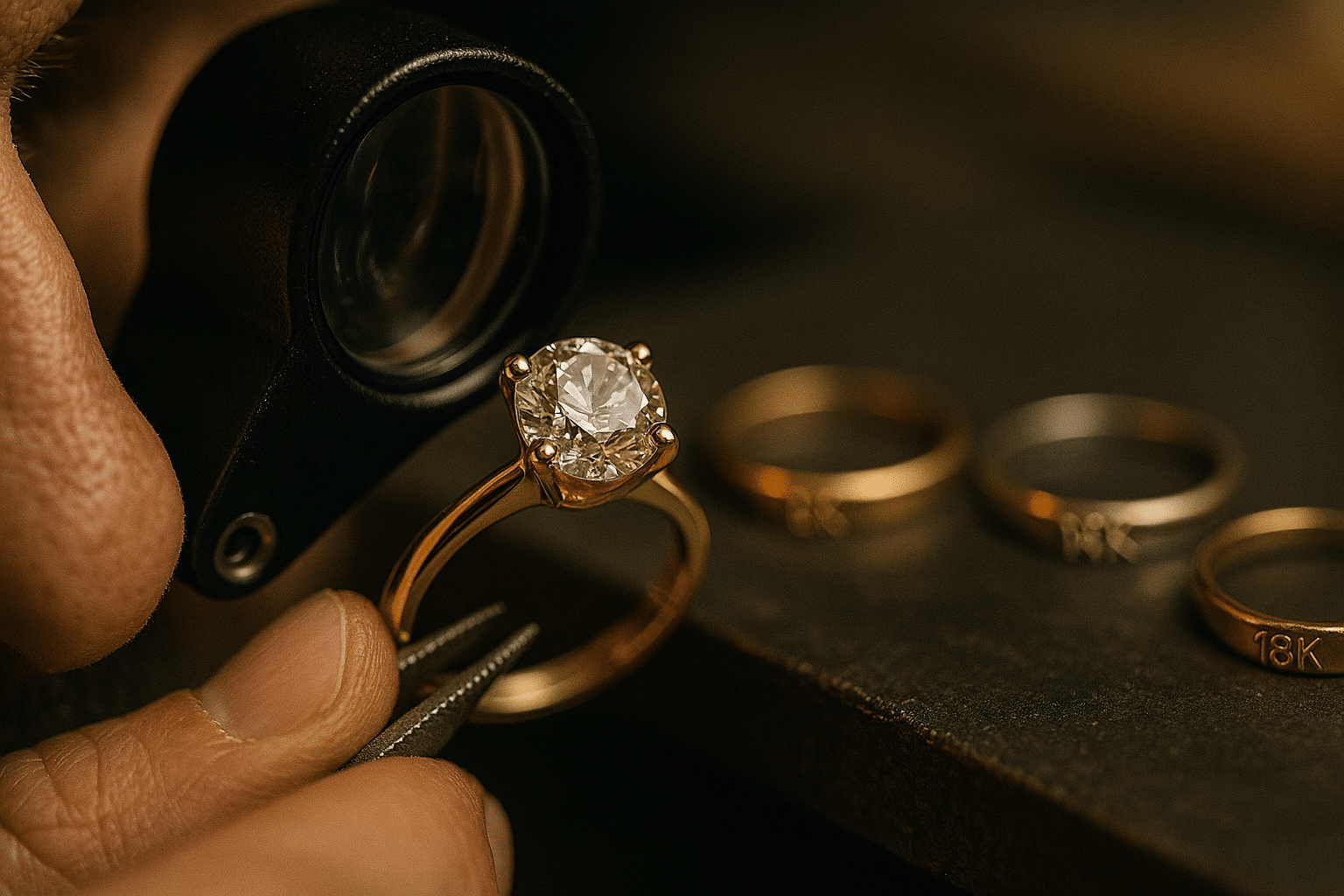
Retail markups can be extremely high. Because I work directly with clients and source natural diamonds or lab-grown diamonds through my private diamond platform, people save significantly on engagement rings, natural diamonds, lab-grown diamonds, wedding rings, earrings, and other custom jewellery.
During your appointment, I guide you through:
- Understanding diamond cut
- Choosing between natural diamonds and lab-grown diamonds for your ring
- Selecting shapes such as round, emerald, princess, pear, radiant, or cushion
- Matching your diamond to your engagement ring or wedding ring design
- Designing wedding bands that pair perfectly with the engagement ring
- Creating matching jewellery items if desired
- Keeping your proposal a secret if needed
Lifetime Value Ranking
- 14K is the one that offers the best durability for engagement rings, rings for daily wear, wedding bands, earrings, and other jewellery pieces.
- 18K provides a luxury tone ideal for natural or lab-grown diamonds, solitaire rings, emerald styles, and matching wedding jewellery.
- 9K offers structural hardness and is excellent for clients who prioritise strength, especially for daily-worn rings and custom pieces.
Sensitive Skin Matters: Choosing the Most Comfortable Karat
If you or your partner has sensitive skin, choosing the right purity is essential when designing engagement rings, wedding bands, earrings, or any jewellery that will be worn every day.
- 18K contains more natural material and is gentle on most wearers.
- 14K is skin-friendly for the majority of clients and is ideal for engagement rings, earrings, and wedding rings.
- 9K contains more copper and zinc, which may irritate some people.
I help clients select the purity that offers long-term comfort for their engagement rings, wedding bands, and any future jewellery they may want to create.
Your 3-Step Process to Choosing the Right Purity
1.) Start With Lifestyle
During your in-person or Zoom appointment, I help you determine whether 9K, 14K, or 18K gold suits your lifestyle, whether you are selecting natural diamonds, lab-grown diamonds, solitaire rings, emerald stones, wedding rings, or a complete bridal set.
2.) Match Purity to Design
We explore your ideas, photos, inspirations, favourite diamond shapes, preferred cut, and jewellery direction. This includes round diamonds, emerald diamonds, princess diamonds, radiant diamonds, marquise diamonds, and lab-grown diamonds. I help you choose the right purity to support your stone.
3.) Create a Timeless Handcrafted Piece
Once your design is final, I handcraft your engagement ring, wedding bands, or matching rings. All bespoke jewellery takes approximately four weeks.
Choosing a Ring That Lasts a Lifetime
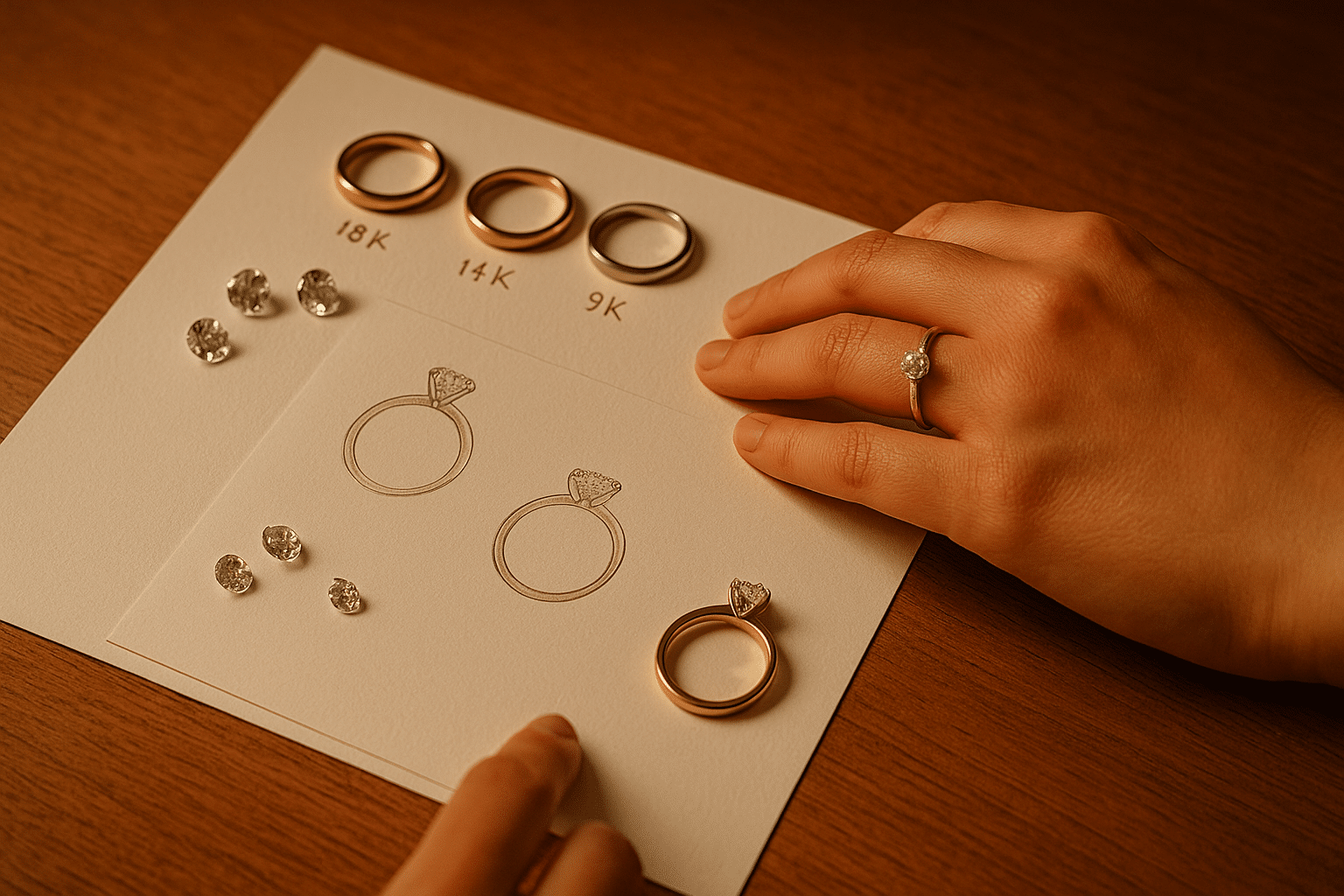
Choosing the right purity is one of the most important steps in crafting meaningful engagement rings, rings that become heirlooms, wedding rings, and fine jewellery. The right choice ensures your diamond engagement ring, solitaire design, emerald cut feature stone, or lab-grown diamond ring ages beautifully and becomes part of your story.
If you are ready to create a bespoke engagement ring, wedding rings, jewellery pieces, earrings, or if you want help selecting the right diamond or lab-grown diamond, book your consultation today. Appointments are available in-person or via Zoom if you are in Brisbane, the Gold Coast, or the Sunshine Coast. For all other locations in Australia, appointments will be via Zoom only.
You will be working directly with me, Michael Dransfield, your Ringman Wingman, and yes, I can help keep your proposal a secret.
0 Comments