
Diamond value is determined by how a stone actually performs, how rare its characteristics are, and how intelligently it is chosen for your purpose, not by guesswork, retail shop pressure, or a single number on an IGI or GIA certificate. Stop guessing. Start saving. Get guided, because most people buying an engagement ring or wedding jewellery are forced to make decisions without truly understanding what they are paying for, and that uncertainty is exactly where money and confidence are lost.
At Burgundy Bespoke Jewellers, you are not just buying a diamond engagement ring. You are working directly with me, Michael Dransfield, a master jeweller with over 50 years of experience, guiding you through every decision so you end up with the right diamond in the right design for your budget, without pressure and without compromise.
This guide explains what actually influences diamond price and quality, how diamond grading really works, and why smart couples choose guidance over guesswork.
The 4Cs Reconsidered: Why Diamond Value Is More Nuanced Than Certificates Suggest
Most buyers are taught that diamond value is determined by the 4Cs: cut, colour, clarity, and carat. While these are essential, they are often misunderstood and relied on too heavily without context.
A diamond refers to value through the interaction of all four factors, not through any single grade. Two diamonds with the same IGI and GIA certificates can look very different in real life and can represent very different value outcomes.
What IGI and GIA certificates do well:
- Provide a standardised assessment of diamond characteristics
- Establish trust and transparency
- Support resale and insurance
What certificates do not do:
- Tell you which diamond looks better
- Explain why one diamond performs more brilliantly than another diamond
- Protect you from overpaying
This is why relying solely on a diamond price calculator or online filters often leads to confusion rather than clarity.
Ultimately, the goal isn’t to chase a perfect certificate but to make a well-informed decision that reflects real beauty and real value. A thoughtful diamond guide helps you look beyond carat numbers and paperwork to understand how diamonds, both lab grown and natural, actually appear when set into engagement rings, wedding rings, and other jewellery worn every day.
When you compare diamonds holistically, factoring in jewelry design, light performance, and long-term satisfaction alongside price and prices, the buying process becomes clearer and more confident.
Whether you shop for lab grown diamonds or natural diamonds, understanding how these diamonds differ in value perception allows you to choose engagement rings, wedding rings, and other jewellery that feel right, look exceptional, and align with your budget – without relying on certificates alone.
Cut Quality and Brilliance: The One Factor That Determines Whether a Diamond Truly Performs
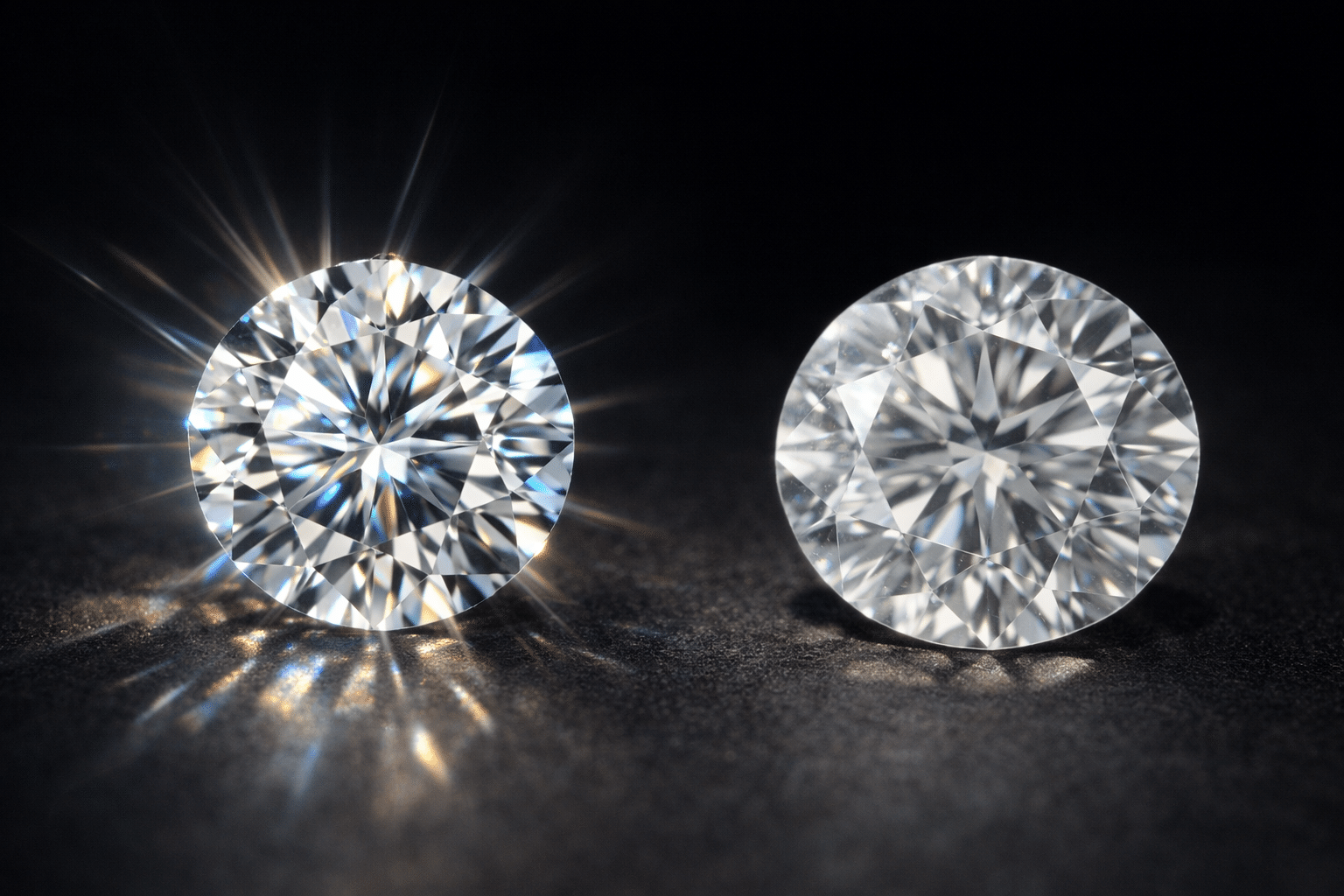
If there is one factor that consistently separates exceptional diamonds from average ones, it is the cut of a diamond.
Cut determines how light enters the diamond, reflects internally, and returns to your eye. This directly controls brilliance, sparkle, and visual presence.
Diamond cut quality depends on:
- Proportions
- Symmetry
- Polish
- Light return
A well-executed, brilliant cut diamond can make a smaller diamond appear brighter and more impressive than a heavier diamond with poor proportions.
This is where guided selection matters. I do not place diamonds side by side physically, because I do not carry diamond stock. Instead, we review diamonds together on my online diamond platform, which connects directly to diamond dealers. This allows us to compare diamonds accurately, using data, imagery, and experience, while avoiding retail markups and saving clients approximately 15 to 20 percent in diamond costs.
For in-person consultations, I use cubic zirconium samples to demonstrate size, cut styles, carat, colour, and proportions so you can visualise how different diamonds will look once handcrafted into your engagement ring, wedding ring, or other piece of jewellery.
Understanding cut quality reframes how you evaluate a diamond, shifting the focus from raw carat weight to how diamonds actually perform once light hits them. A practical guide makes it easier to compare lab grown diamonds and natural diamonds objectively, using imagery and data rather than jewellery shop showroom pressure, so price and prices stay aligned with real visual impact.
When you see how a precisely cut diamond can elevate an engagement ring or wedding rings regardless of size, jewellery decisions become clearer and more intentional. This method allows you to shop with confidence, knowing the diamond you choose is selected for brilliance, not just numbers, and will translate beautifully from screen to finished ring without unnecessary markups.
Colour Grades and Cost: Identifying the Sweet Spot Where Beauty Meets Value
Diamond colour grading runs from D to Z, with D being colourless. Higher diamond colour grades are rarer and command higher prices, but a higher diamond grade does not automatically mean better value.
In real settings:
- Slight colour differences are often invisible once set
- Metal choice influences perceived colour
- Strong cut quality can mask a subtle tint
For many diamond engagement rings and wedding rings, the best balance between beauty and value sits in the near-colourless range.
Fancy colour diamonds follow different rules entirely. A pink diamond is valued based on hue, saturation, and tone rather than the traditional colour scale. Pink, purplish pink, intense pink, and vivid pink diamonds are priced according to rarity and demand, not standard grading brackets.
I guide clients through these differences carefully, so they understand what they are paying for and why.
When colour is understood beyond the letter grade, diamonds become easier to evaluate with confidence rather than assumption. A clear guide shows how carat, cut, and setting work together to influence how colour is perceived, which is why many lab grown and natural diamond options offer excellent visual results without pushing prices unnecessarily higher.
This matters most when diamonds are placed into engagement rings and wedding rings, where metal choice, lighting, and everyday wear soften minor colour differences. By focusing on how diamonds actually appear in finished rings – rather than chasing the highest diamond grade – you can make informed choices that balance beauty, realism, and prices, selecting stones that deliver visible value instead of paying for distinctions that rarely show.
Clarity in Context: When Imperfections Matter and When They Don’t
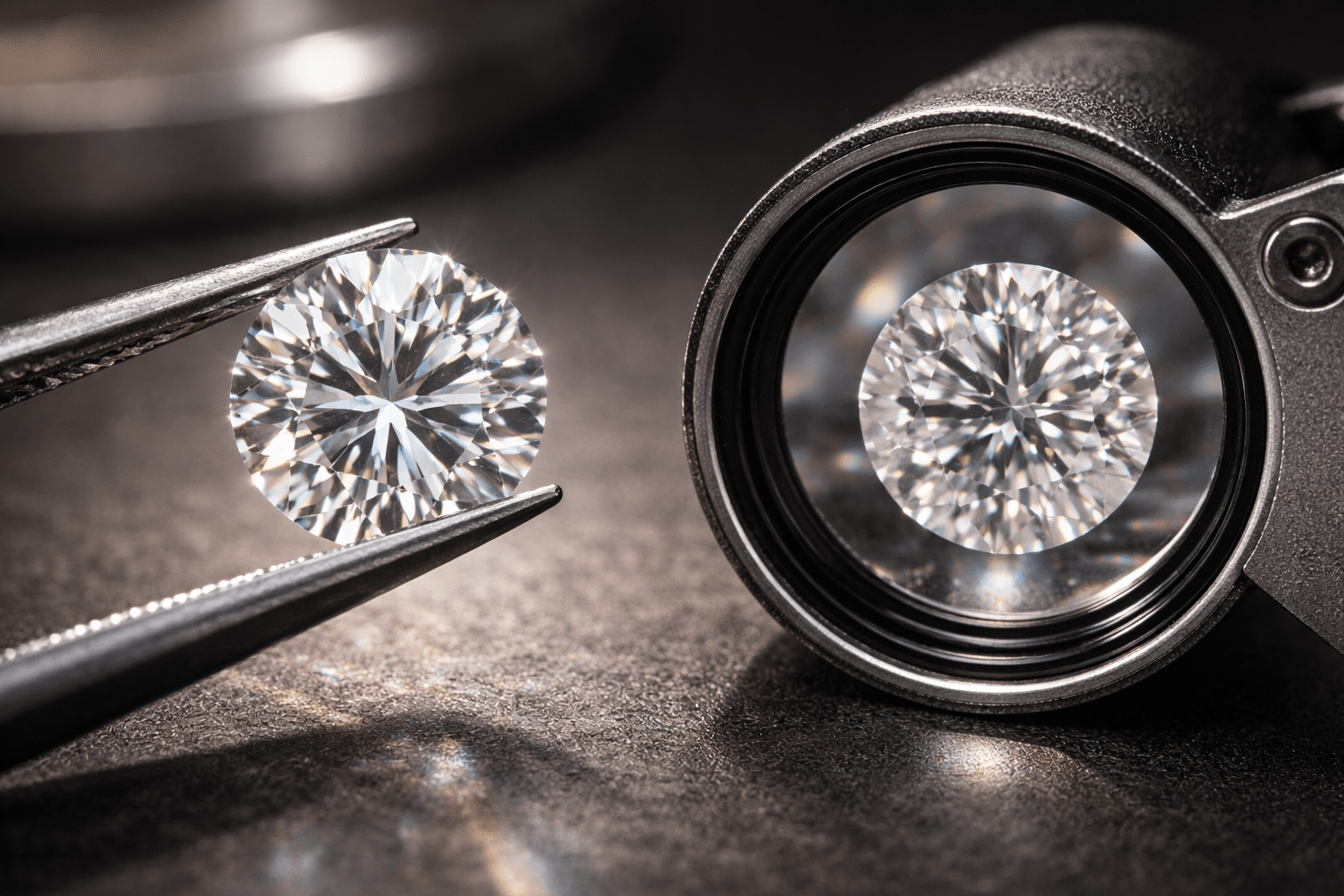
Clarity describes internal inclusions and external blemishes, graded under magnification. While clarity grade affects rarity and price, it does not always affect appearance.
Important clarity considerations include:
- Whether inclusions are visible without magnification
- Where inclusions are located
- How cut and brilliance interact with clarity
Many diamonds graded VS2 or SI1 appear flawless to the naked eye. Paying for higher clarity grades often increases price without improving real-world beauty.
Strong fluorescence is another factor that must be assessed carefully. In some diamonds, it improves face-up colour. In others, it can cause haziness. This cannot be judged by grade alone and requires experience.
Seen in real-world terms, clarity is less about flawlessness and more about how a diamond actually looks once worn. A well-informed guide helps you recognise when inclusions or fluorescence are irrelevant to appearance, particularly in lab grown diamonds where higher clarity is common.
When these stones are set into engagement rings and wedding rings, cut, light return, and design usually outweigh what can only be seen under magnification, allowing you to choose diamond rings that look clean and bright without overvaluing technical grades.
Carat Weight Misconceptions: How Visual Presence Often Outweighs Raw Size
Carat measures weight, not size. One carat diamond weighs 0.2 grams, but two stones with the same carat weight can look very different depending on cut and shape.
What affects visual size:
- Cut depth and spread
- Shape selection
- Proportions
Prices per carat increase sharply at popular milestones, such as one carat. Choosing a slightly lighter carat diamond with excellent cut often results in better brilliance and better value.
Shapes such as oval, marquise, and emerald cuts tend to appear larger than round diamonds of the same weight, which can be a smart choice depending on design goals.
When carat is understood as weight rather than size, price becomes easier to evaluate realistically. Because price rises sharply at popular milestones, choosing just below them can deliver better visual impact for the price. Focusing on cut and shape helps maximise presence without paying a higher price.
Beyond the 4Cs: Subtle Characteristics That Quietly Influence Price and Rarity
Several factors influence diamond price and desirability, but are rarely explained clearly.
These include:
- Shape demand in the current market
- Light performance patterns
- Girdle thickness
- Fluorescence intensity
- Whether the stone is a natural diamond or a lab grown diamond
Lab-grown diamonds offer excellent quality and visual beauty, but current market data shows lower resale value compared to natural stones. Neither option is right or wrong. The right choice depends on priorities, budget, and long-term expectations.
I source both natural and lab-grown diamonds and explain the differences clearly so clients can decide with confidence.
Diamond Certification Explained: How Grading Labs Shape Trust, Value, and Resale Confidence
Diamond certification plays a critical role in value and trust. The two most widely recognised laboratories are GIA and IGI, both of which provide independent grading reports used globally.
The Gemological Institute of America is widely regarded as the strictest grading authority and is often preferred for resale confidence. IGI certification is commonly used for lab grown diamonds and provides reliable grading when interpreted correctly.
Certification ensures transparency, but it must be interpreted properly. Softer grading can make a diamond appear better value when it is not, which is why expert interpretation matters.
Market Dynamics and Ethical Considerations: What Informed Buyers Should Know Before Purchasing
Diamond pricing is influenced by global supply, demand, and ethical sourcing.
Key realities include:
- Natural diamond supply is finite
- Lab-grown supply continues to expand
- Ethical sourcing is increasingly important to buyers
I can source any precious gemstone and ensure ethical considerations are discussed openly. The goal is not to push a particular option, but to help you choose what aligns with your values and expectations.
A Simple 3 Step Diamond Buying Process
Step 1: Clarify your goal
Define whether the diamond is for an engagement ring, wedding bands, or other jewellery.
Step 2: Review real options
I show you a small, carefully selected range of diamonds within your budget and explain why one offers better value than another.
Step 3: Design with confidence
Once the stone is chosen, we design your ring together. Every piece is handcrafted from scratch and finished in approximately four weeks.
Why Guessing and Retail Shortcuts Cost More
Most online stores leave you guessing. Traditional jewellers sell what they have in stock. I do neither.
I do not carry jewellery to try on, because everything is customer-led in design. What you wear is created specifically for you. Designs are viewed and refined during your consultation, whether in person or via Zoom.
I am not trying to sell you what I have. I am helping you create what you want, while keeping the proposal secret if needed and guiding you every step of the way.
For sizing, I can send our free world-famous Multisizer to your home so you can size accurately and privately.
Stop Guessing. Start Saving. Get Guided.

Diamond value is not about chasing the highest grades or relying on automated estimates. It is about making informed decisions with expert guidance, transparency, and craftsmanship.
You will be speaking directly with me, Michael Dransfield, your Ringman Wingman, guiding you through diamond selection and bespoke jewellery design with no pushy sales and no retail pressure.
If you are planning an engagement, wedding, or custom piece and want to understand how to get the best value without guessing, you can book a free diamond consultation and let me show you how to choose with confidence.
0 Comments