
Stop Guessing. Start Saving. Get Guided.
Why Smart Couples Choose Burgundy Bespoke Jewellers
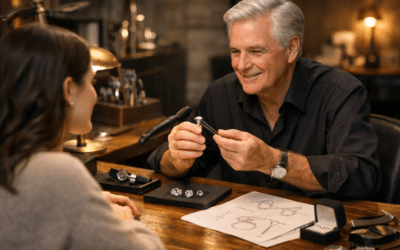
You’re not just buying a ring — you’re getting my 50+ years of expertise, one-on-one. Most online stores leave you comparing, guessing, and hoping. With me, you’re guided through every choice with clarity and confidence.
- Diamond Selection: I show you stones in your budget from our private online diamond platform, which connects directly to reputable global dealers and typically saves clients 15–20%.
- Design Guidance: I know what lasts, what suits your partner’s style, and what delivers the best long-term value.
- Quality Guarantee: Every ring is handcrafted from scratch — no stock, no premade settings, no mass production.
- No Sales Pressure: I don’t sell from inventory. I help you create what you want.
- Discreet for Proposals: I also help you keep the entire process secret if needed.
We can meet in person or via Zoom in Brisbane, the Gold Coast, or the Sunshine Coast. For other locations in Australia, all appointments will be via Zoom. You speak directly with me, Michael Dransfield — your Ringman Wingman.
How to Tell If a Diamond Is Real — Your Straightforward Guide
A genuine diamond is identified through a mix of simple at-home checks and advanced professional testing. Many people feel unsure because of the huge retail markups, confusing terminology, and the fear of choosing a fake or low-quality stone.
You deserve honest guidance and expert eyes, not pressure. Below, I’ll walk you through what you can safely check at home — and what requires specialist equipment.
Immediate At-Home Checks: Quick Ways to Spot Warning Signs
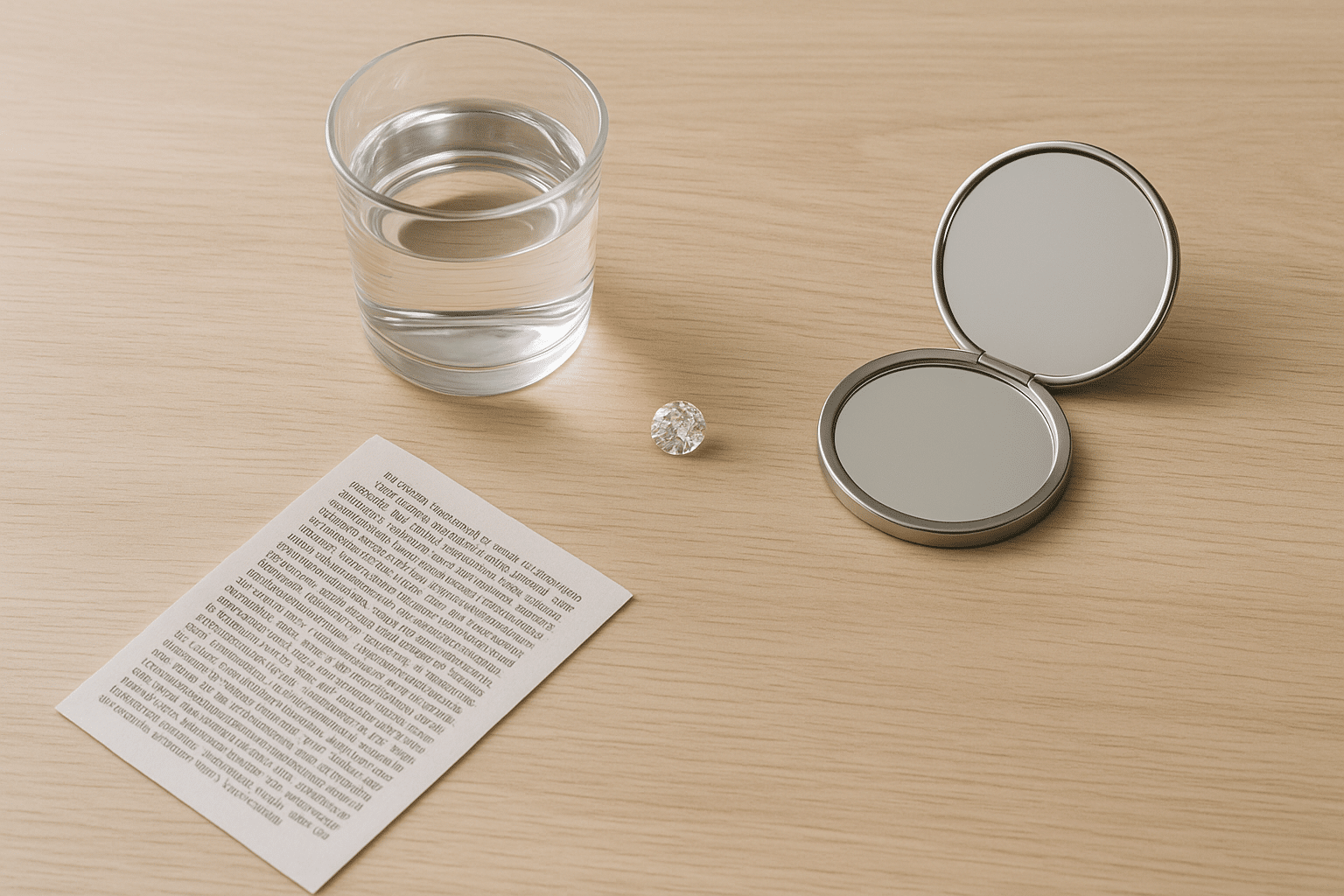
At-home methods are useful as initial screening tools. They are not definitive, but they can help you spot immediate red flags that suggest a diamond might be fake.
You can safely perform the following simple test options at home using basic household tools you see every day:
- Fog test: Gently breathe on the gemstone and observe the fog. A genuine diamond disperses heat extremely quickly due to high thermal conductivity, causing the fog to vanish almost instantly.
- Water test: Fill a clear glass with room-temperature water and drop the loose stone inside. A real diamond will sink rapidly. If it floats or sinks slowly, it may be fake.
- Dot and newspaper check: Place the flat side of the diamond over a dot or text. A real diamond will distort the image due to its refractive index. If the dot is clearly visible, it’s a negative sign.
- Mirror test: A real diamond usually won’t show a crisp, full reflection when placed flat on a mirror. A clear, full reflection may indicate a fake or synthetic stone.
- Basic scale comparison: Compare weight against known carat equivalents. Incorrect density may indicate a fake.
While these at-home methods are helpful, they cannot determine if the diamond is natural or lab-grown, if it was created using HPHT, or precisely measure clarity or cut. For that, professional testing is essential.
How Light and Fire Reveal the True Nature of a Diamond
Diamonds respond to light in a way that other gems rarely can match. Their unique refractive index and internal structure shape how light enters and exits.
Under normal white light, diamonds produce brilliant white reflections and crisp flashes of fire. Imitations often show scattered rainbow patterns.
Under UV light, many natural diamonds emit a faint blue glow. Lab-grown stones may glow yellow, green, white, or not at all.
Moissanite often displays exaggerated fire and may glow green or yellow under UV, which is why conductivity testing is also used.
The way a stone handles light is a powerful clue, but it is still only one step in determining authenticity.
What Physical Properties Can (and Can’t) Tell You About Authenticity
The scratch test is unreliable. Many synthetics can also scratch glass, and you may damage the stone or setting.
Conductivity testing is more accurate. Professional testers evaluate both thermal and electrical conductivity, distinguishing diamond from cubic zirconia, glass, and moissanite.
Professional testers, used with magnification tools, can identify real vs fake diamonds with far greater precision.
However, even this is not the final confirmation. Full laboratory certification is required.
Hidden Clues in the Setting: What I Look For First
Before touching the stone, I examine the setting — because jewellery speaks before the tools come out.
I look at:
- Metal stamps and hallmark accuracy
- Craftsmanship and symmetry
- Whether the stone suits the setting
- Evidence of wear or repairs
- How securely the prongs hold the stone
- Whether the piece has been resized or reworked
In diamonds and fine jewellery, the setting often reveals more than the stone. Skilled professionals can often identify authenticity before any tests begin.
The Limits of DIY Testing — When Only an Expert Eye Will Do
While at-home methods are convenient and can provide quick insights, they cannot replace professional verification. Modern synthetic stones are engineered to mimic nearly every physical feature of natural diamonds.
DIY testing also cannot determine:
- The origin of the diamond (natural vs lab-grown)
- Accurate grading standards
- The internal structure or microscopic inclusions
- Whether the stone has undergone treatments
- Its official market value
This is why expert examination using professional equipment remains essential before buying, selling, or insuring diamond jewellery.
No home test can replace what a trained specialist can identify instantly. Authenticity often lies beyond what the eye can see — or what quick tests can reveal.
Advanced Professional Methods: How Real Diamonds Are Scientifically Verified
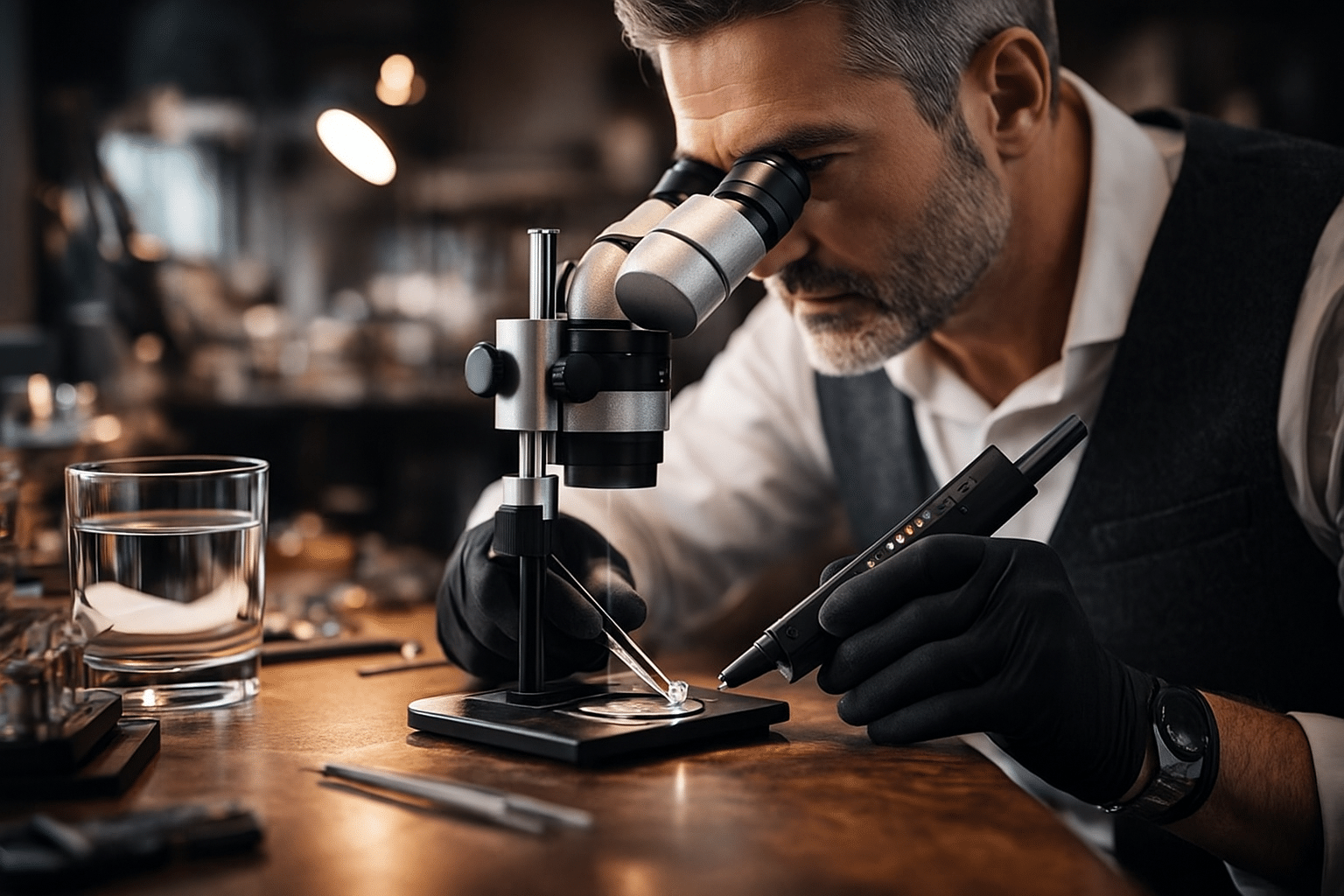
In a professional environment, tools such as microscopes, spectroscopy, X-ray fluorescence, and photoluminescence testing reveal microscopic information invisible to the naked eye.
At Burgundy Bespoke Jewellers, I use these verification methods to ensure every stone is accurately assessed before any design or purchase decisions are made.
This is especially important with lab grown diamonds created using HPHT or CVD techniques.
The Gold Standard: Certification, Grading, & Why It Ultimately Matters
The final authority in diamond authentication is certification. Organisations such as the Gemological Institute of America provide globally recognised grading reports that verify authenticity and assess quality.
These certificates include:
- Carat weight
- Colour grade
- Clarity grade
- Cut grade
- Shape and measurements
- Fluorescence and growth origin
A certified diamond provides proof of authenticity, protects resale and insurance value, and eliminates uncertainty. Whether purchasing engagement rings, building a fine jewellery collection, or making an investment, certification is the gold standard.
Experience the Power of Knowing Your Diamond Is Real
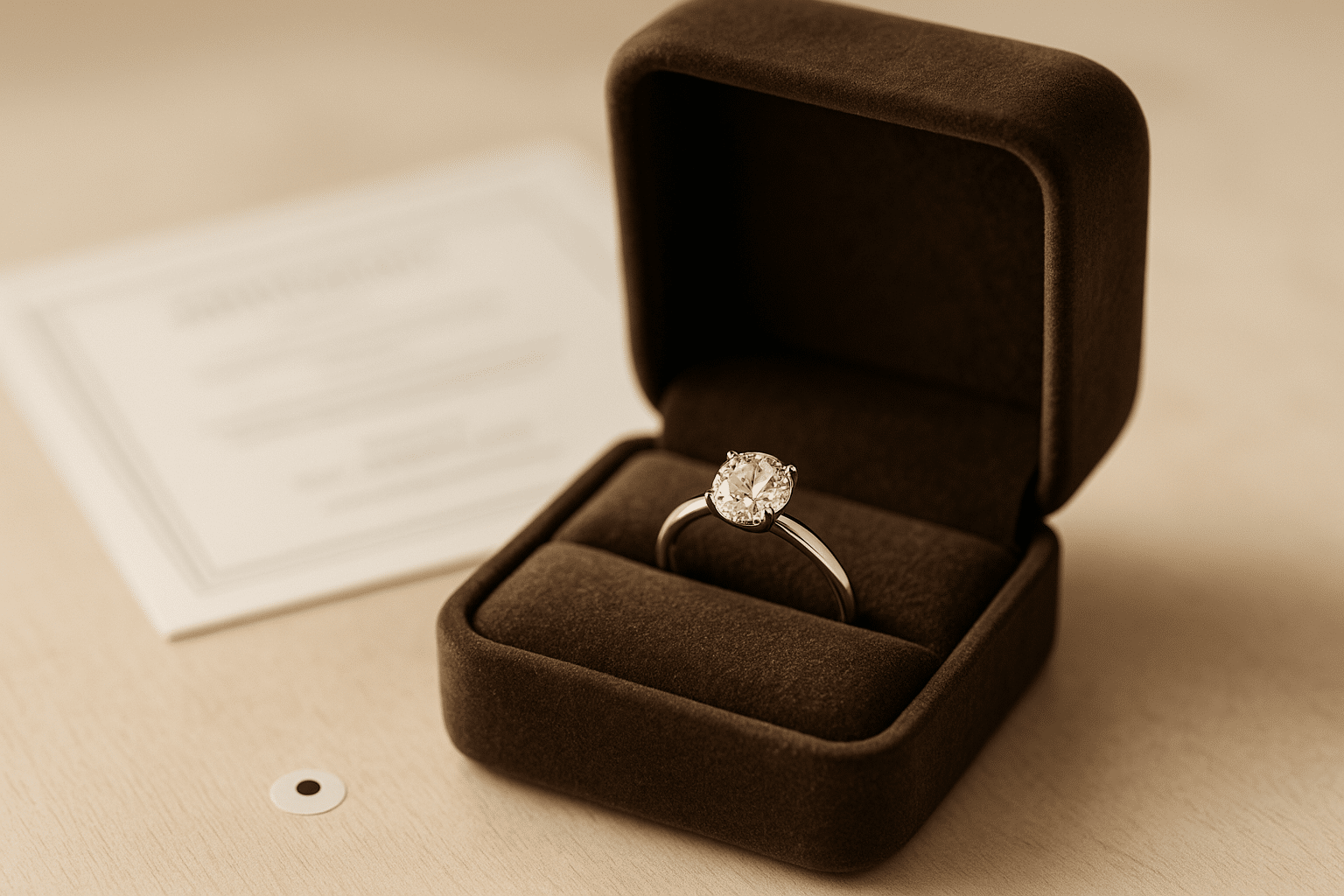
Diamonds should symbolise love, trust, and commitment — not confusion. Whether you’re buying an engagement ring, upgrading heirloom jewellery, or seeking clarity, I’m here to guide you with honesty, expertise, and care.
Your design, your story — crafted the right way.
Get in touch, explore our diamond platform, or book your in-person or Zoom consultation.
I’ll help you create something meaningful, valuable, and beautifully personal.

0 Comments