
What Is White Gold, Really? The Truth Behind Its Luxury Look, Composition & Value
White gold is a premium white metal alloy created by mixing pure gold with other metals such as silver, palladium, nickel or copper, giving it its naturally bright colour while maintaining the prestige and value of gold. Don’t buy a diamond engagement ring until you see this — most people are shocked to learn that retail markups can be 300% and that how to design an engagement ring your partner will love is easier and more affordable when guided by an expert jeweller like me, Michael Dransfield, rather than choosing mass-produced jewellery pieces, because custom engagement rings are trending for 2025, custom is better value than people realise, and you don’t need to know anything to make a perfect choice that feels deeply meaningful and never ordinary.
At Burgundy Bespoke Jewellers, I see clients every day who feel overwhelmed by choice, terminology, and price every time they shop. They worry about choosing the wrong diamond, the wrong style, or a jewellery piece that doesn’t truly last. My role as your “Ringman Wingman” is to simplify the world of white gold jewellery, diamond engagement rings, wedding bands, eternity rings, diamond earrings, necklaces, bracelets, bangles, pendants, chains, and other gift options, so every client feels educated, confident, and supported before they shop for personal pieces or gifts.
White gold became popular as a modern alternative to yellow gold during the early 20th century. Today, it remains one of the most popular choices for a wedding ring, an engagement ring, a tennis bracelet, earrings, necklaces, a timeless pendant, or gifts. It offers a sleek, elegant, and contemporary look that complements natural diamonds, lab grown diamonds, gemstones, sapphire, emerald, ruby, topaz, and other coloured stones beautifully. Its refined tone works well with classic, new, halo, signet, drop, hoop, and chain designs and is often chosen for both men’s and women’s jewellery, watches, timepieces, and bridal sets in Australia and around the world.
When you visit a boutique or gift shop, shop online, or browse a jewellery collection page, you will notice a full range of white gold designs next to yellow gold, rose gold, as well as silver pieces. Each colour carries a different mood, style, and allure, but white gold is best known for its versatility, brilliance, and effortless elegance.
White Gold Alloys Explained: How Karat, Metal Blends & Purity Affect Price, Colour & Strength
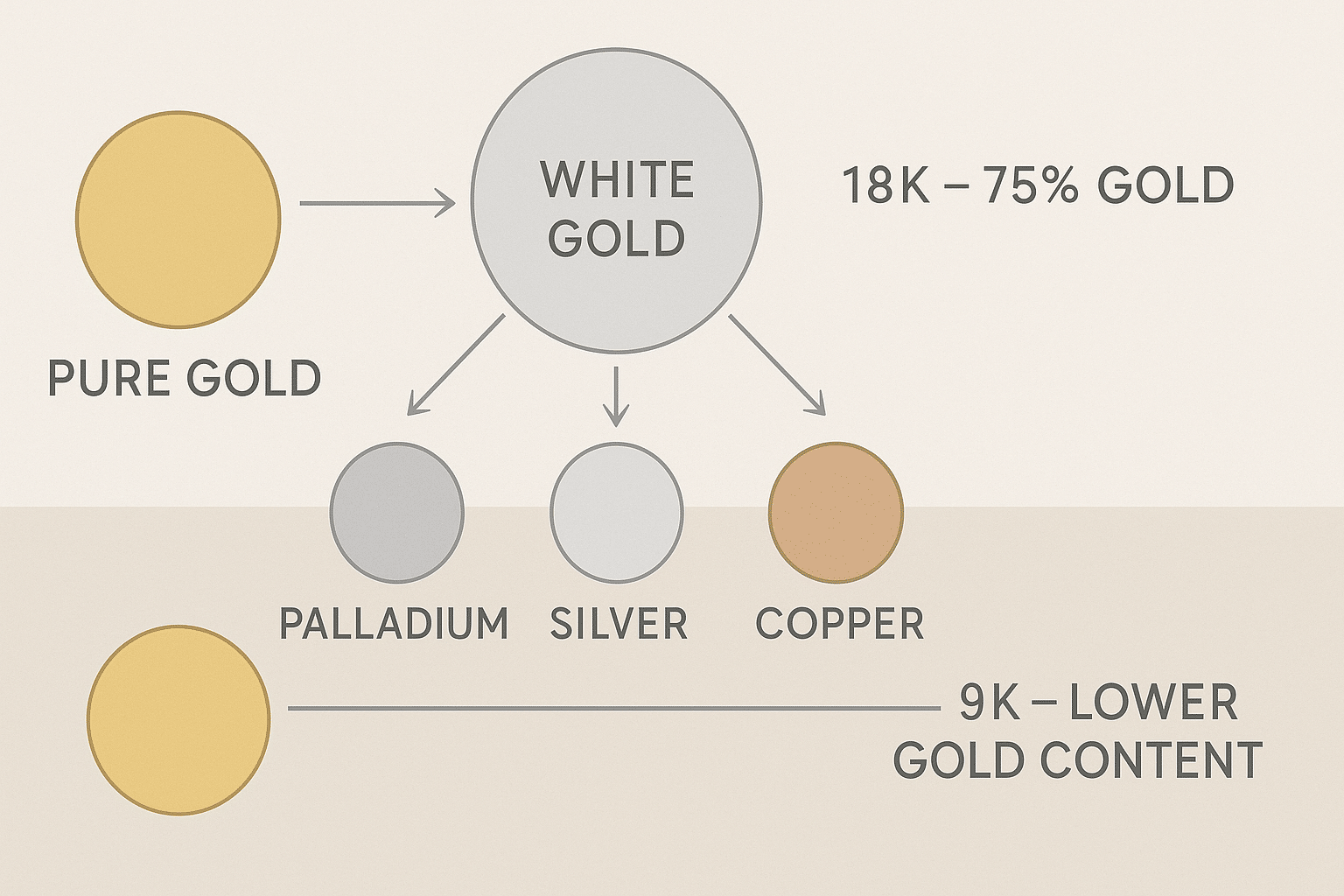
White gold is not a naturally white metal in its pure state. Pure gold is yellow, extremely soft, and unsuitable for everyday wear. To create strength, durability, and a lighter colour, gold is mixed with other metals, creating alloys that change the final properties of the jewellery piece. The karat number – such as 9 karat, 14 karat, or 18 karat – indicates how much pure gold is contained within the alloy.
For example, 18 karats means the alloy contains approximately 75% pure gold, while the remaining portion consists of supporting metals like palladium, silver, nickel, or copper. 9 karat white gold contains less gold but is often stronger and more budget-friendly, which can influence price, buying decisions, and long-term wear.
The specific alloy blend changes:
- The colour tone, from bright white to slightly warm white or yellow tinted
- The hardness and strength of rings, bands, earrings, necklaces, and bracelets
- The weight and feel when worn on the skin
- The suitability for gemstone, diamond, and lab grown diamond settings
Palladium-based white gold tends to be more hypoallergenic and is often used in high-end diamond jewellery pieces. Nickel-based white gold is durable but may not suit certain skin types. Copper is sometimes added in small amounts to increase strength and alter tone, but in white gold, its use is carefully controlled to preserve the desired colour.
The difference between karats, alloys, and metals is not just academic. It directly affects the clarity of a stone, the way light reflects from a ring, the brilliance of diamonds, and the long-term performance of your jewellery. Knowing this foundation means you can make a better, more informed, and more confident buy.
Why Is White Gold White? The Science of Rhodium Plating — And the Industry Secrets Most Buyers Never Hear
Even after mixing gold with white metals, the base colour is usually a slightly warm grey or creamy yellow. To achieve the brilliant, bright white finish you see in most shop windows, white gold jewellery is plated with rhodium.
Rhodium is one of the rarest and most reflective metals in the world. It belongs to the platinum family and is used as a plated coating over white gold to give it that crisp, mirror-like white tone. This plating enhances beauty, improves scratch resistance, and increases shine.
Many jewellers do not clearly explain that rhodium plating wears down over time. Through daily contact with skin, soap, water, friction, and natural oils, this plated layer slowly fades. When it does, the underlying alloy may show through as a slightly yellow or grey tone. This is not a flaw. It is a natural part of how white gold behaves.
At Burgundy Bespoke, I use my 50 years of experience to fully educate you. I ensure you understand that rhodium plating can be refreshed as part of normal maintenance, often every one to three years, depending on wear, lifestyle, and exposure. Proper knowledge avoids disappointment and ensures your expectations align with reality.
Knowing this gives you power. It means you can plan care, understand your jewellery better, and make smarter long-term decisions for your engagement, wedding, eternity, or gifting journey.
Why Does White Gold Turn Yellow Over Time?
White gold does not actually “turn yellow.” What happens is the thin rhodium layer gradually wears off, revealing the original alloy tone beneath. Because the base is still gold mixed with other metals, such as silver and nickel, it may show hints of yellow, champagne, or light grey, depending on the specific formula used.
This change usually happens slowly over time and is influenced by:
- Frequent hand washing and chemical exposure
- Friction from daily activities, tools, or surfaces
- Natural oils produced by the skin
- Wearing rings, necklaces, bracelets, and earrings every day without rotation
- Contact with hard rock, metal, or abrasive surfaces
It is important to know this is normal and easily fixed through professional replating. It does not mean your jewellery is low quality or poorly made. It simply means your jewellery piece has lived, moved, and been part of your daily world.
Many people see this colour shift as a sign to return to their jewellers for care, inspection, and re-polishing. At Burgundy Bespoke, I offer the best guidance, tools, and ongoing service to help protect and elevate your treasured pieces, from diamond rings to diamond earrings, necklaces, and bracelets.
How Durable Is White Gold in Real Life? Engagement Rings, Wedding Bands & Daily Wear Tested
White gold is designed for everyday wear. It is widely used in various jewellery pieces, such as diamond engagement rings, wedding bands, bracelets, pendant settings, hoop earrings, bangles, chains, necklaces, and timepieces. Its durability makes it the best option for daily life, even for clients with hands-on jobs or active lifestyles.
When compared to pure gold, white gold alloys are significantly stronger. They resist bending, scratching, and deformation far better and provide a secure foundation for gemstones, natural diamonds, and lab grown diamonds. However, like any metal, it is not indestructible. Hard impacts can still cause damage, and settings must be inspected regularly.
White gold typically performs better than silver in longevity and structural integrity, and is similar in strength to platinum, depending on karat and alloy composition. For new clients choosing between white gold vs platinum, the final decision often depends on style, budget, maintenance preference, and desired weight.
White gold remains a reliable choice for anyone seeking jewellery that balances beauty and strength. Whether you’re browsing the best bracelets, timeless diamond pieces, elegant earrings, or meaningful gifts, white gold offers lasting value and everyday practicality. Its resilience makes it ideal for new diamond engagement rings, wedding rings, personalised jewellery pieces, and gifts, while its bright tone pairs effortlessly with silver and other precious metals. For those looking to shop for the best jewellery pieces that stand the test of time, white gold continues to shine as the best option for both treasured keepsakes and modern gifts.
Is White Gold Hypoallergenic?
White gold can be hypoallergenic depending on the alloy used. Palladium-based white gold is usually a safer choice for sensitive skin. Nickel-based alloys may cause irritation for people with nickel sensitivity. This is why it is important to ask about the metal content before you shop.
At Burgundy Bespoke, I take this seriously. I guide clients, new and old, through selection, test results when needed, and educate based on each client’s skin type and lifestyle. A personalised approach ensures comfort, safety, and long-term satisfaction for diamond engagement rings, wedding rings, bracelets, necklaces, earrings, or gifts.
White Gold Care, Testing & Protection: At-Home Experiments + Professional Verification Methods
White gold care is simple but important. Regular maintenance helps protect colour, shape, clarity, and structure. Here are some simple principles to follow:
- Remove rings, earrings, necklaces, and bracelets during heavy work, exercise, or cleaning
- Store jewellery pieces separately to avoid scratches from other metals or gemstones, especially diamonds
- Clean with mild soap, warm water, and a soft cloth or small soft brush
- Avoid harsh chemicals, bleach, or abrasive products
- Schedule professional inspections and replating when needed
If you are unsure of authenticity, a professional jeweller can conduct tests including density measurement, acid testing, XRF scanning, and hallmark verification. These methods allow you to verify karat, alloy content, and structural integrity of your jewellery.
You should never rely on quick online tools, downloads, random links, or unverified sources to validate your jewellery. Seeking expert guidance is always best. Whether you’re caring for a treasured gift or sourcing future gifts, the safest choice is always to trust an expert and shop with confidence, knowing your jewellery is authentic, protected, and made to last.
White Gold vs Platinum: The Bespoke Buyer’s Guide to Making the Smartest Long-Term Investment
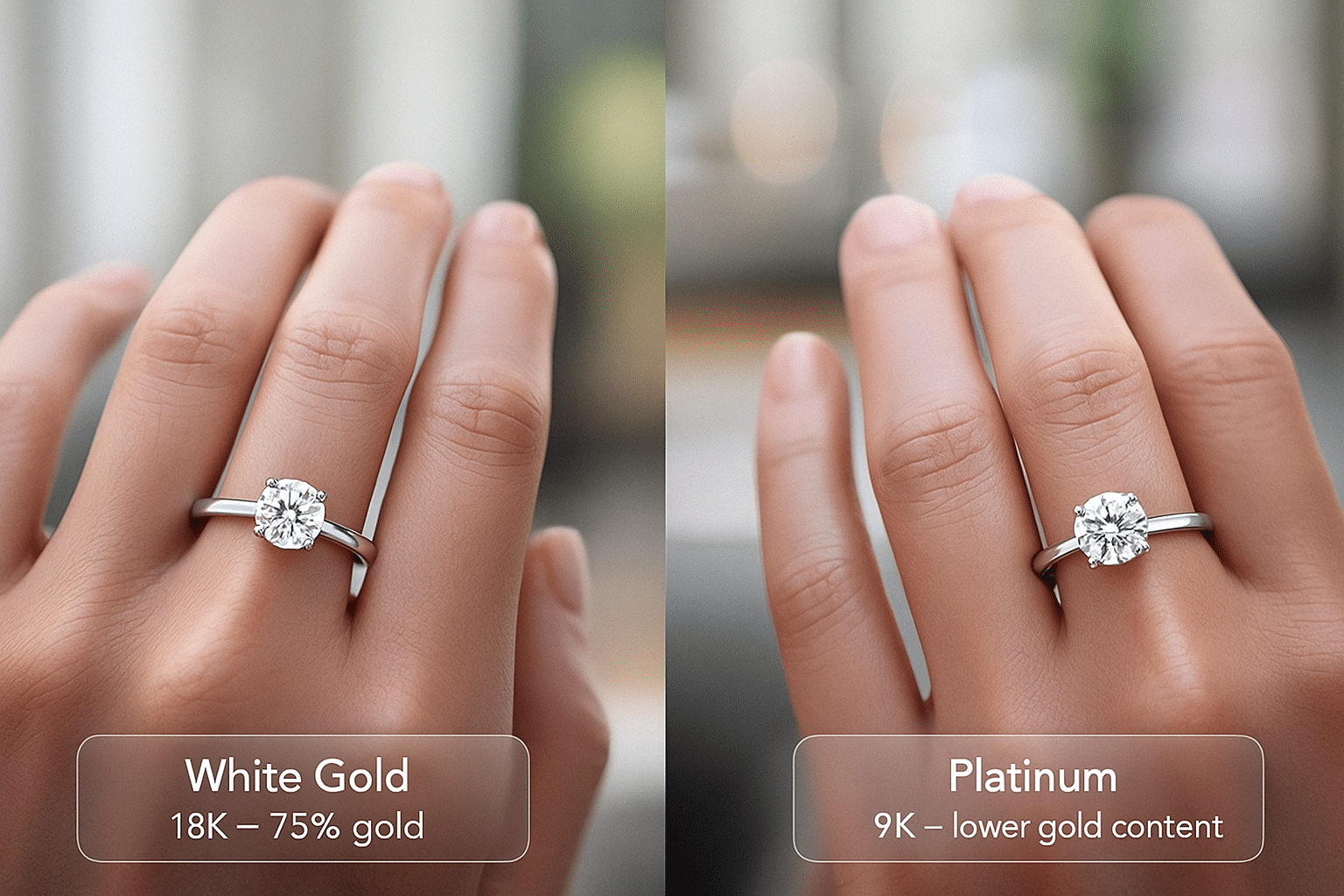
The difference between white gold and platinum is often misunderstood. While both are prized white metals, they behave very differently over time. White gold is lighter, more affordable, and requires periodic rhodium plating to maintain brilliance. Platinum is naturally white, heavier, and develops a patina rather than wearing away, but it often comes at a higher price.
Both are excellent choices depending on your goals. Platinum is ideal for those who want to shop for jewellery pieces that require minimal maintenance and get maximum density. White gold is perfect for those seeking a bright, timeless, versatile tone at the best value.
Here is a simple comparison to help your choice:
- White gold: lighter in weight, more affordable, plated with rhodium, extremely popular in modern engagement and wedding jewellery designs
- Platinum: heavier, naturally white, higher price point, develops patina over time
- Both: excellent for diamonds, gemstones, and heirloom-quality jewellery pieces
Ultimately, choosing the best metal for your bespoke piece comes down to personal style, lifestyle, and long-term vision. Whether you’re investing in a timeless diamond centrepiece, refined diamond earrings, looking to shop for one-of-a-kind engagement rings, or thoughtful gifts, both white gold and platinum provide a stunning foundation for natural and lab grown diamonds. Their versatility also pairs beautifully with silver, giving you endless design possibilities for something truly new and meaningful. When you’re ready to shop for heirloom-quality jewellery or a memorable gift, making an informed choice ensures your piece will be treasured for generations to come.
3 Step Bespoke Process
- Discover — Meet with master jeweller Michael Dransfield in-person or via Zoom (depending on your location) to explore options, education, and design direction
- Build — Choose stone, metal, carat, setting, and final shape for your personalised piece
- Create — Handcrafted and delivered for life’s most important moments or as precious gifts
This process removes stress, reduces fear, and ensures your jewellery reflects your story rather than a mass-produced template from a corner gift shop. Reach out today and shop with confidence!
Your Story, Crafted in White Gold — Begin Your Bespoke Journey Today

At Burgundy Bespoke Jewellers, I specialise in handcrafted white gold jewellery, including diamond engagement rings, wedding ring sets, eternity bands, tennis bracelet designs, diamond earrings, gemstone pendants, bangles, and necklaces. Our mobile and online service allows you to contact or connect from anywhere in Australia, including Brisbane, Melbourne, and beyond.
Whether you are planning an engagement, want to get a Christmas gift, choosing birthstones for November, looking for diamond earrings, or building a custom-made gift piece, our education-based approach empowers you to make the best decision when you shop.
Every piece we make is a reflection of your story, your world, your time, and your style. If you are ready to explore white gold, understand alloys, clarify your buying journey, and invest in something truly timeless, we invite you to connect with our team, view our collections, subscribe to our updates, and begin your bespoke journey today. In-person or Zoom meetings are available for clients in Brisbane, the Gold Coast, and the Sunshine Coast. For all other locations, appointments will be done via Zoom.

0 Comments