
White gold is a blend of pure gold and white metals, finished with rhodium plating to create its bright white appearance, and understanding that properly can save you from years of confusion.
Before you buy a diamond engagement ring, wedding ring, earrings, necklaces, and other pieces of jewellery, read this. Most people think white gold is naturally white. It isn’t. And if no one explains that clearly, you can end up wondering years later why your ring or other piece of jewellery looks slightly warmer than the day you proposed. Stop guessing. Start saving. Get guided. If you are investing in a diamond engagement ring, wedding ring, custom rings, necklaces, earrings, or other jewellery, you deserve to understand exactly what you are choosing and why.
I am Michael Dransfield. I have been crafting bespoke jewellery for over 50 years. When we meet, in Brisbane, the Gold Coast, the Sunshine Coast, or via Zoom anywhere else in Australia, you are not walking into a jewellery shop. You are sitting down with a master jeweller who will guide you through every decision.
Let me explain white gold properly.
What White Gold Really Is – and Why It Isn’t Naturally White
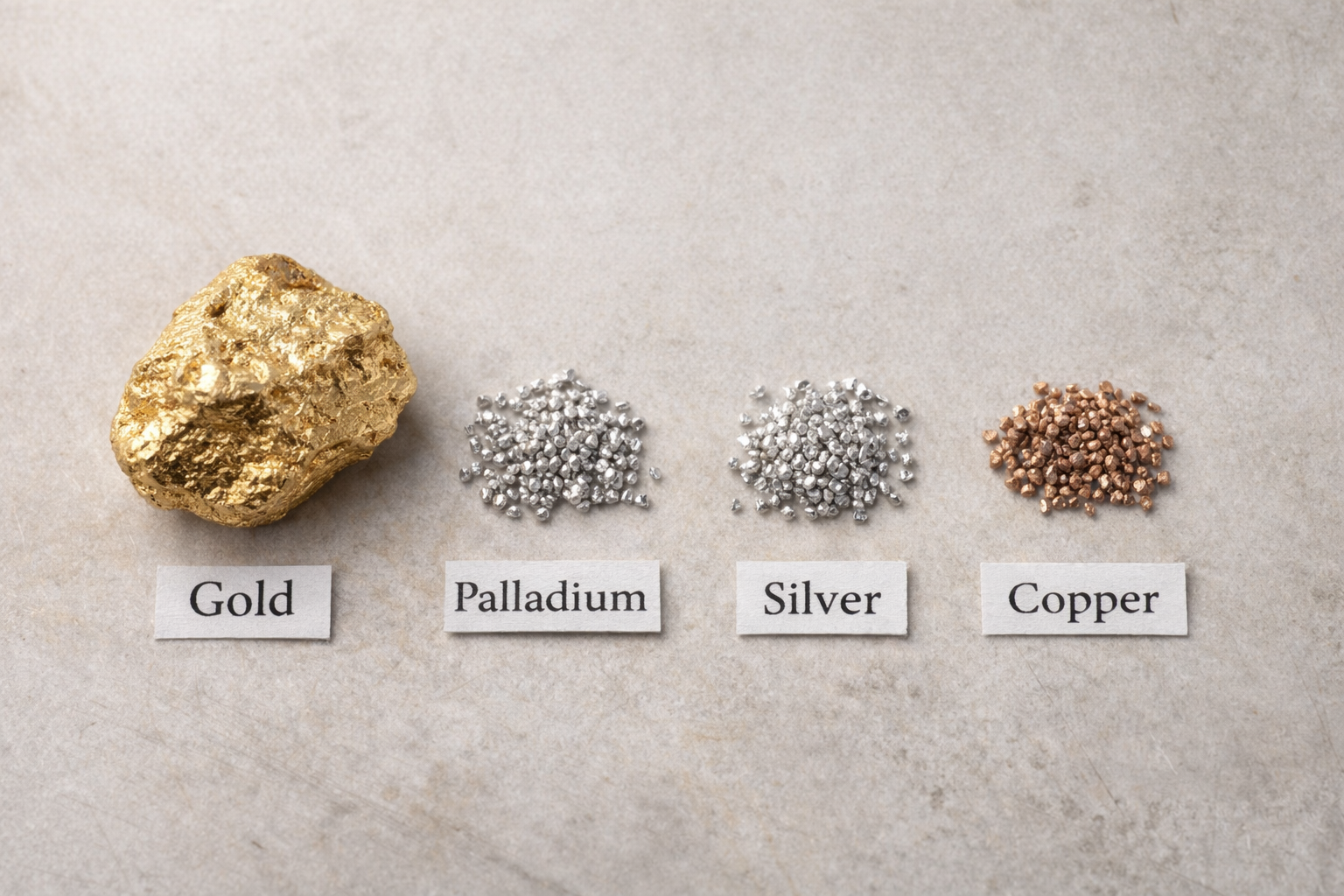
Gold in its pure form is yellow. Always has been. Always will be.
Pure gold, 24 karat, is naturally yellow and quite soft. Too soft for most engagement rings and wedding rings that are worn every day. So we strengthen it by blending it with other metals. That blend is called an alloy.
White gold is created by mixing pure gold with white metals such as:
- Palladium
- Silver
- Sometimes nickel, though used less often today due to skin sensitivities
- Small amounts of copper, depending on the alloy balance
Even after alloying, white gold is not paper white. It is more of a soft champagne tone.
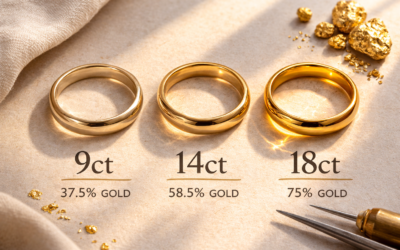
White gold is usually available in 14 karat, 58.5 percent gold, or 18 karat, 75 percent gold. The higher the karat, the more gold content and the slightly softer the metal.
If you have ever read a Wikipedia article or searched an encyclopedia entry about white gold, you will see technical explanations about alloys and metal composition. What matters practically is this.
White gold is gold first.
That means it carries some of gold’s natural warmth underneath the surface. That is completely normal.
White gold is gold first, and understanding that simple truth changes how you choose diamonds, engagement rings, wedding rings, earrings, necklaces, and fine jewellery. When you meet with me, Michael Dransfield, as your Ringman Wingman, this is exactly the kind of guidance you receive: clear explanations, honest comparisons, and a practical guide to how diamonds, metals, silver tones, and settings actually perform in real life.
Rather than walking into a traditional jewellery shop filled with stock, you are personally guided through diamond selection on our online platform and bespoke jewellery design, whether you are creating engagement rings, wedding rings, earrings, necklaces, or meaningful gifts. Every piece is handcrafted around your vision, your budget, and your timeline – including keeping a surprise engagement or wedding proposal completely discreet if needed.
With a transparent policy, certified diamonds, and over 50 years of experience behind every recommendation, you can move forward knowing your diamond, your engagement rings, your wedding rings, and other jewellery are chosen with clarity, not guesswork – and that your wedding jewellery or special gift will be created exactly as it should be.
How White Gold Is Made (And Why Craftsmanship Matters)
This is where experience really matters.
Creating white gold engagement rings, wedding rings, earrings, necklaces, and other jewellery is not just melting metal and pouring it into a mould. The alloy balance must be right. The casting must be clean. The finishing must be precise.
Here is the simplified process:
- Alloying. Pure gold is blended with palladium, silver, or other white metals to improve durability and soften the yellow tone.
- Forming the design. Your ring or other piece of jewellery is crafted according to your chosen design.
- Hand finishing. Surfaces are refined, claws shaped, details perfected.
- Rhodium plating. A thin layer of rhodium is applied to create that bright white brilliance.
Poor production can result in brittle metal, weak claws, uneven wear, or stones coming loose years down the track.
I do not carry stock. I do not have rows of engagement rings, wedding rings, earrings, necklaces, and other jewellery sitting in a cabinet. Everything I create is handcrafted specifically for you.
When we design your engagement ring, wedding ring, or other piece of jewellery, we look at lifestyle, stone size, setting style, long-term wear, and your budget. That is how you avoid problems before they happen.
How white gold is made matters, but how it is crafted matters more. The strength of your engagement ring or other piece of jewellery, the security of your diamond, and the longevity of earrings or a meaningful gift all come down to experience and precision. I do not run a traditional jewellery shop or carry stock; every piece is handcrafted specifically for you.
When we meet, I personally guide you through diamond selection on my online platform, explain silver tones and setting choices, and help you avoid costly mistakes before they happen. With a clear policy and over 50 years of expertise, your engagement piece and special gifts are created with care, clarity, and confidence, never guesswork.
Why White Gold Is Rhodium-Plated – and How That Affects Its Future
Rhodium is a naturally white metal from the platinum family. It is bright, reflective, and very hard.
White gold is usually rhodium-plated to:
- Enhance brightness
- Improve scratch resistance
- Create a crisp, brilliant white finish
- Protect the underlying alloy
Rhodium is a surface treatment. It does not last forever.
Over time, typically 12 to 24 months, depending on how often the diamond engagement ring or other jewellery is worn, the plating gradually thins. You might notice a slightly warmer tone appearing underneath, particularly on the underside of a ring.
This does not mean the ring or jewellery is failing.
It does not mean the gold is turning bad.
It simply means the rhodium layer has worn naturally.
A simple replate restores the original bright white appearance.
Some clients prefer that crisp white finish permanently. Others like the slightly softer tone that develops over time. It is a personal choice.
Will White Gold Turn Yellow? What to Expect Over the Years
White gold does not suddenly turn yellow.
It gradually reveals its natural undertone if the rhodium plating wears away.
Here is what typically happens:
- First year. Bright white, high polish, very reflective.
- After a couple of years. Slight warmth may show in high contact areas.
- Long term. With occasional maintenance, it continues to look excellent.
Factors that influence wear include:
- Your skin chemistry
- Gym use or manual work
- Exposure to chemicals
- Karat selection, 14k versus 18k
- How often do you wear the ring or jewellery piece
Higher karat white gold contains more pure gold, so it may show warmth a little sooner than 14k.
Properly crafted white gold can last generations. I have restored diamond rings for families that were made decades ago. The metal holds up beautifully when designed correctly from the beginning.
White gold does not suddenly turn yellow. As the rhodium wears over the years, a slight warmth can appear, which is completely normal and easily refreshed. The key is choosing the right diamonds, setting, karat balance, and finish from the beginning.
That is why this guide matters. When we meet, I personally guide you through how your diamond, silver tone preference, and lifestyle all influence long-term wear, so your engagement piece or special gift continues to look exceptional.
I do not run a traditional shop with stock; every piece is handcrafted for you and supported by a clear policy. With the right advice, your diamond jewellery and meaningful gifts will age beautifully for decades.
Is White Gold Durable Enough for a Lifetime of Wear?
Yes, when it is designed properly.
White gold is strong enough for:
- Solitaire engagement rings
- Halo designs
- Pavé diamond settings
- Wedding bands
- Pendants and fine jewellery
Durability depends on thoughtful design and correct metal thickness. A large diamond requires properly shaped claws. A delicate pavé ring needs balanced structural support.
This is where my role as your Ringman Wingman comes in.
You do not need to know everything about metal durability. That is my job. I will tell you what works and what does not, and why.
Yes, white gold is durable enough for a lifetime when it is designed properly, with the right thickness and structure for how you actually live. That is why I do not run a traditional shop with a stock of rings, silver jewellery, other pre-made options, and quick fixes. I guide you as your Ringman Wingman, so your piece is built to last, whether you prefer a bright silver look or something softer over time.
It also means your gift is not a gamble, and your future gifts are designed with long-term wear in mind. Our policy is simple: in the unlikely event of a manufacturing fault, I stand by my craftsmanship and will ensure it is put right.
White Gold vs Platinum: Which Suits Your Lifestyle, Budget, & Design?
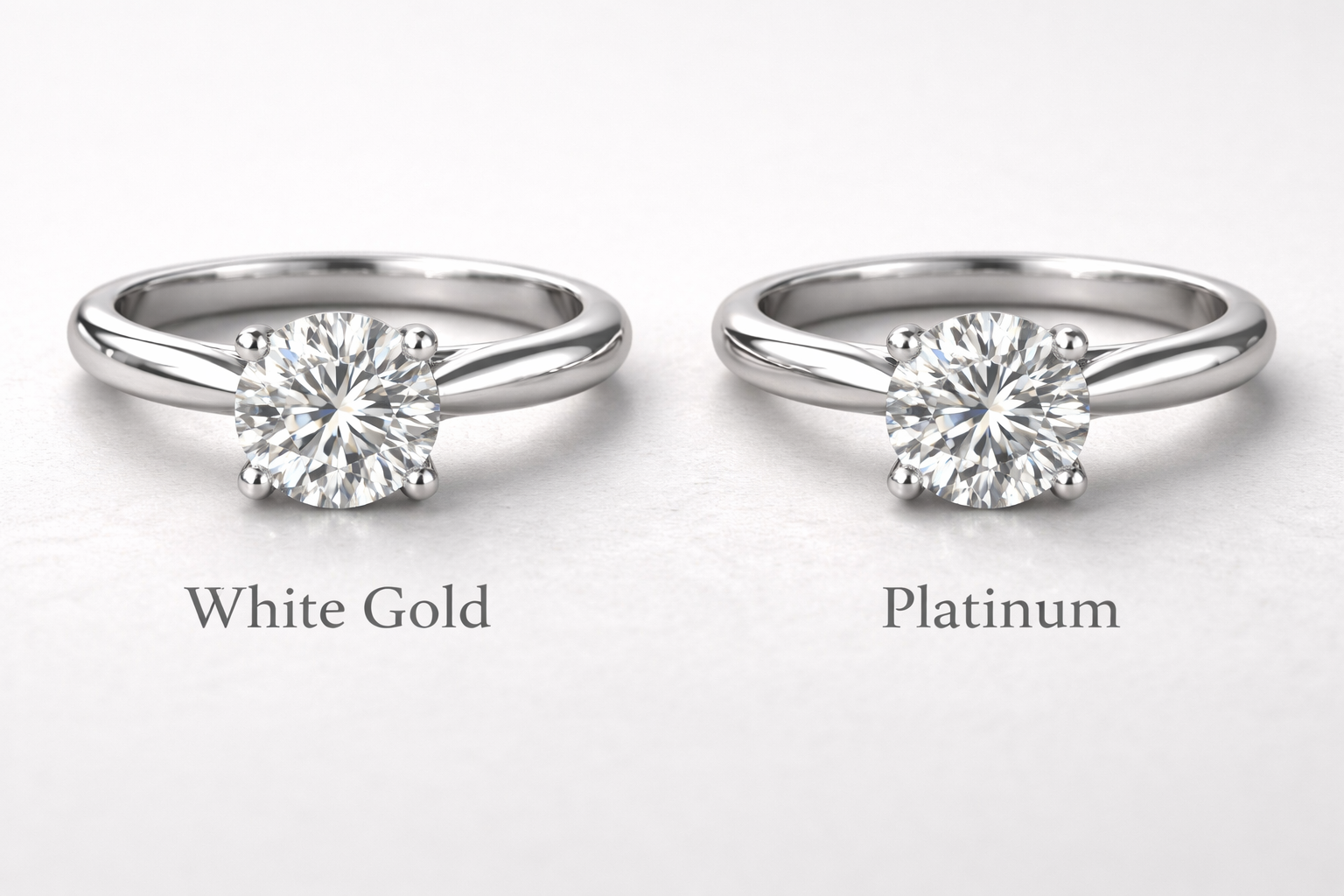
This is one of the most common conversations I have during consultations.
Here is a practical comparison:
| Feature | White Gold | Platinum |
| Colour | Rhodium-enhanced white | Naturally white |
| Weight | Lighter | Heavier |
| Maintenance | Occasional replating | Polish only |
| Cost | Generally lower | Higher |
| Durability | Strong | Extremely durable |
Platinum is naturally white and develops a soft patina over time. It does not require rhodium plating.
White gold is lighter and more budget-friendly.
Neither is better. It depends on your lifestyle, design preference, and how you want your ring or other jewellery to age.
When we meet, we will discuss both and decide what suits you best.
Choosing between white gold and platinum is not about which metal is better, but which suits your lifestyle, budget, and design vision. Platinum is naturally white and develops a soft patina over time. White gold achieves a similar bright silver finish through rhodium and is lighter to wear, making it a popular choice for those who love a bright silver look.
The right choice depends on your lifestyle, budget, and design priorities. During your consultation, I guide you through how each metal behaves in real life so your diamond engagement piece, wedding band, or meaningful gift performs exactly as it should.
I do not operate a traditional shop with preset stock. Every piece is created around you, so your gift and future gifts are chosen with informed confidence and built to last.
How We Choose the Right Diamond for White Gold
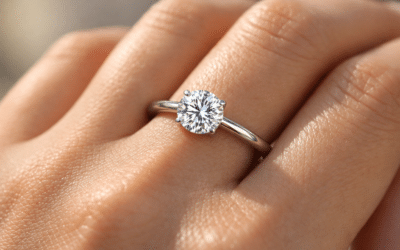
White gold pairs beautifully with diamonds because its bright finish enhances a diamond’s brilliance.
During your consultation, we will explore diamonds together on my online diamond platform. Stones range from under one carat to over five carats if required. The platform connects directly to trusted dealers, helping you secure strong value without retail shop markups.
We will review certification from GIA or IGI, where applicable and compare options within your budget. I typically show several diamonds and explain clearly why one offers better value based on cut, clarity, colour, and proportions.
I do not place loose diamonds on a table to compare physically because I do not carry stock. In person, I bring cubic zirconia samples in different sizes and cuts so you can visualise scale and proportions accurately.
That is transparency. And it keeps the focus on making the right decision.
White gold amplifies a diamond’s brilliance, which is why careful selection matters. In your consultation, we assess certified stones on my online platform, comparing cut, colour, clarity, and proportions in a clear, practical way.
There is no retail shop counter or pre-selected inventory influencing the process. Instead, every decision is made around your priorities, ensuring your engagement ring, wedding ring, earrings, and future gifts are chosen with precision, transparency, and long-term confidence.
The 3 Step Process We Use

Step 1. Consultation and Education
We meet in Brisbane, the Gold Coast, the Sunshine Coast, or via Zoom. I explain white gold, platinum, diamond options, and design considerations clearly. No pressure.
Step 2. Diamond and Design Selection
We review certified diamonds on the online platform, refine your chosen design, and finalise details. If you are planning a surprise proposal, we keep it discreet. I can also send out our free Multisizer so you can size from home.
Step 3. Handcrafted Creation
Your bespoke engagement ring or other piece of jewellery is handcrafted in Australia and typically completed in approximately four weeks.
Simple. Personal. Guided.
Is White Gold the Right Choice for You?
White gold is ideal if you:
- Love a bright, modern appearance
- Want strong durability with balanced cost
- Prefer a lighter metal than platinum
- Want a timeless look that complements diamonds beautifully
The most important part is not the metal. It is getting the guidance right.
An ordinary online shop will leave you guessing. They show filters and product pages and expect you to decide alone.
When you work with me, you are not just buying a ring or meaningful gifts. You are getting over 50 years of experience guiding you.
Other sites sell you a diamond and a setting.
I help you get the right diamond in the perfect setting for your budget.
If you are considering white gold for an engagement ring, wedding band, or meaningful gifts and want expert, personal guidance, book a free consultation.
Let me show you how to get the best value. And let us design something extraordinary together.
0 Comments